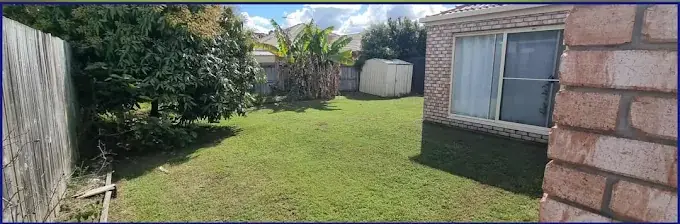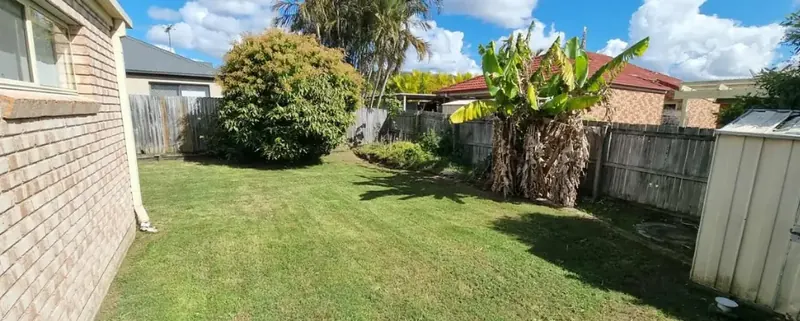
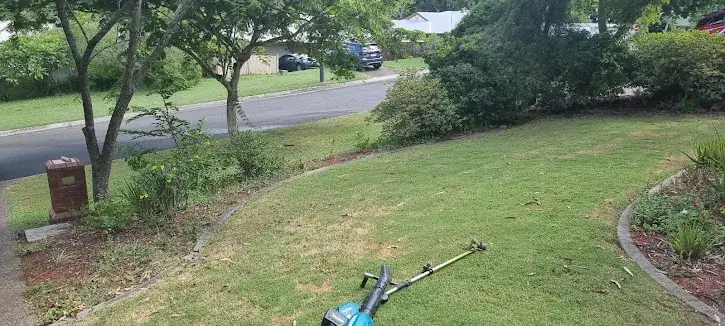
Ipswich winters are mild by most standards, but our lawns are warm-season grasses and they notice. Growth slows to a crawl from June, colour fades, and the lawn is at its most vulnerable to weeds and wear. The good news is that winter lawn care is mostly about doing less, and doing a couple of things at the right time.
Mow less, and mow higher
From June to August most Ipswich lawns only need a cut every three to four weeks. Raise the mowing height a notch (buffalo 50–60 mm, couch 30–35 mm, kikuyu 40–45 mm). The longer leaf keeps more green, shades out winter grass and protects the crown from frost. Do not scalp a lawn in winter to "tidy it up"; it will not grow back until September.
Water deeply, rarely
Dormant grass needs very little water, and cool nights mean overwatering invites fungus. If there has been no rain for three weeks and the lawn is going grey, give it one deep soak in the morning. Otherwise leave it. Turn automatic irrigation down to once a week or off.
The two weed jobs that matter
Bindi. Winter is the only time to control bindi, while it is a soft rosette and before the prickles form. Treat in June or July with a bindi and clover product safe for your grass.
Winter grass. The bright tufty grass that shows up in May and seeds through winter. A selective winter grass herbicide now, or a pre-emergent next April, stops it leaving bare patches when it dies off in spring.
Our lawn weed guide covers both in detail.
Skip the fertiliser (mostly)
Warm-season grasses will not use a growth fertiliser in winter. Save the main feed for September. If you want colour for an inspection or an event, an iron-based "winter green" product greens the leaf without pushing growth. See our fertilising calendar.
Keep leaves and clutter off the lawn
Deciduous trees, jacarandas and gum litter smother dormant grass and hold moisture against it. Rake or blow leaves off every couple of weeks, and move trampolines, pools and furniture so the grass underneath does not die out before spring.
Frost
Low-lying parts of Ipswich (Ripley, Rosewood, Walloon, the river flats) get frost. Frosted grass browns off but the crown usually survives. Do not walk on or mow a frosted lawn; wait until it has thawed and dried.
Set up spring
Late August is when winter care pays off. Aerate compacted areas with a fork, top dress low spots, sharpen the mower blade, and have your spring fertiliser ready for the first week the lawn is clearly growing again. A lawn that came through winter thick and weed-free will be green a month before the neighbours'.
Frequently asked questions
How often should I mow my lawn in winter in Queensland?
Every three to four weeks for most buffalo, couch and kikuyu lawns in South East Queensland, at a slightly higher cutting height than summer.
Should I water my lawn in winter?
Rarely. A deep soak in the morning every three weeks or so in a dry spell is enough. Overwatering in winter encourages fungal disease.
Why is my lawn going brown in winter?
Warm-season grasses go dormant and lose colour in cold weather, and frost browns the leaf tips. It is normal and the lawn greens up again from September.
Can I fertilise my lawn in winter?
Growth fertiliser is wasted in winter. Use an iron-based product if you want colour, and save the main feed for early spring.