Most people buy too little mulch, lay it too thin, and wonder why the weeds are back in a month. The maths is simple once you know the target depth, so here it is, plus a guide to the mulch types that actually suit Ipswich and Springfield gardens.
The formula
Length (m) × width (m) × depth (m) = cubic metres. Then add about 10% for settling and uneven ground.
The right depth for most garden beds is 75 mm (0.075 m). Go to 100 mm for weed suppression in a bed you are not planting into for a while, and 50 mm around shallow-rooted plants and in small beds.
Worked example
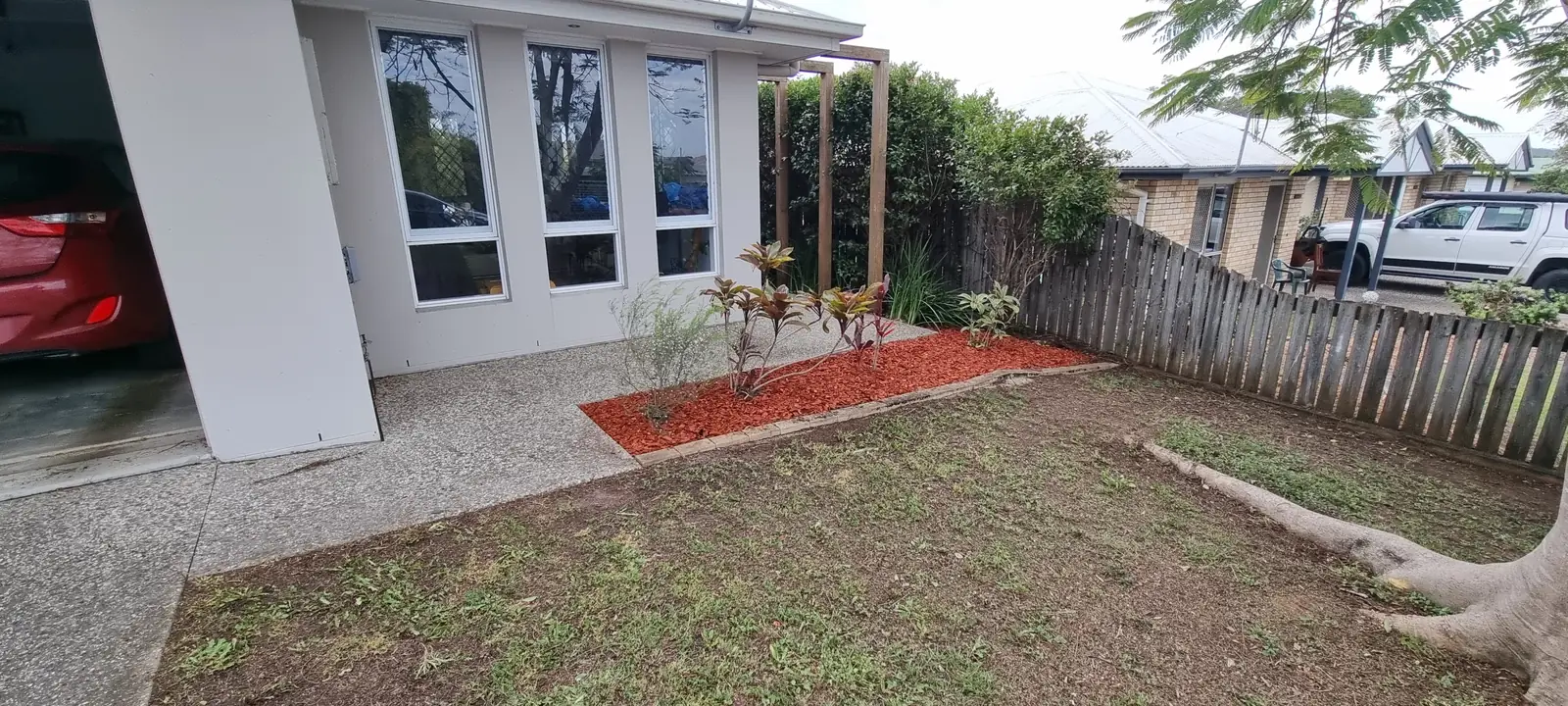
A front garden bed 8 m long and 1.5 m wide at 75 mm deep: 8 × 1.5 × 0.075 = 0.9 m³. Add 10% and you need 1 cubic metre.
Bags vs bulk
- A standard bag is about 50–70 litres. 1 m³ = 1,000 litres, so roughly 15–20 bags per cubic metre.
- Bulk mulch from a landscape yard is sold by the cubic metre and is usually a third to half the price of bags once you need more than about 0.5 m³.
- A 6×4 trailer holds about 1 m³ heaped. A standard ute tray holds a bit less.
Quick reference
| Bed area | At 50 mm | At 75 mm | At 100 mm |
|---|---|---|---|
| 5 m² | 0.3 m³ | 0.4 m³ | 0.55 m³ |
| 10 m² | 0.55 m³ | 0.85 m³ | 1.1 m³ |
| 20 m² | 1.1 m³ | 1.65 m³ | 2.2 m³ |
| 40 m² | 2.2 m³ | 3.3 m³ | 4.4 m³ |
Figures include the 10% allowance.
Which mulch for a Queensland garden
- Hardwood chip or forest fines: the all-rounder. Lasts 12–18 months, suppresses weeds well, suits native and ornamental beds. Forest fines knit together and do not blow around.
- Tea tree mulch: fine, dark, looks sharp, lasts well and resists termites better than most. Good for front-of-house beds and around pools.
- Pine bark: chunky and decorative, slow to break down, but light and can wash out of sloping beds in a storm.
- Sugar cane or lucerne: for vegetable beds and anything you want to feed. Breaks down in a season and needs topping up.
- Pebbles and decorative stone: permanent and tidy, but they heat up in summer and do nothing for the soil. Best for courtyards and the strip beside the driveway.
- Coloured mulch: looks good on day one and fades within months in Queensland sun.
How to lay mulch so it lasts
- Weed the bed properly first. Mulch slows weeds; it does not kill established ones.
- Water the soil well before mulching, especially in summer.
- Lay it 75 mm deep and keep it 5–10 cm clear of plant stems and tree trunks to avoid collar rot.
- Rake it level and lightly water the surface to settle it.
- Top up with 25–30 mm each spring.
Frequently asked questions
How many bags of mulch are in a cubic metre?
About 15 to 20 standard 50–70 litre bags. Once you need more than half a cubic metre, bulk mulch from a landscape yard is usually much cheaper.
How deep should mulch be?
75 mm for most garden beds. Use 100 mm for weed suppression in an empty bed and 50 mm around shallow-rooted plants.
What is the best mulch for Queensland gardens?
Hardwood forest fines or tea tree mulch for general beds, sugar cane for vegetables, and pebbles for courtyards. Avoid dyed mulch, which fades fast in Queensland sun.
Does mulch stop weeds?
A 75–100 mm layer stops most weed seeds germinating by blocking light. It will not kill weeds that are already established, so weed the bed first.